pixel
 You are here:  Home  ›  Hair Problems  › 
pixel
hairstyle Hairfindertrademark graphic
Hairstyles, Hair Care & More!
 
Home  |  Search  |  Contact  |  News  |  Updates  |  Hair on eBay  |  Hairbooks  | 
pixel
pixel
pixel
pixel
pixel
Virtual Hairstyles  |  Hairstyles (members)  |  Hairstyles  |  Hair Q&A  |  Hair Care Products  | 


Celebrity Hairstyles graphic


hair and fashion


pixel
pixel
pixel
Verwijderen van ongewenst haar Enlever la pilosité indésirable Eliminar el vello no deseado AddThis Social Bookmark Button - Bookmark this Page!
pixel

Removing Unwanted Hair
       Unwanted hair is a problem every woman deals with at one time or another in her life. Whether it's on the face, legs, or elsewhere on the body, hair removal is a substantial part of the hairy and beauty industry. There are dozens of methods for removing hair from places where it is unwanted, and these methods break down into two main categories - temporary and permanent.
 
Temporary:
 
       As the name itself implies, these methods of hair removal give results which last only short periods of time and must be repeated often (usually within days).
 
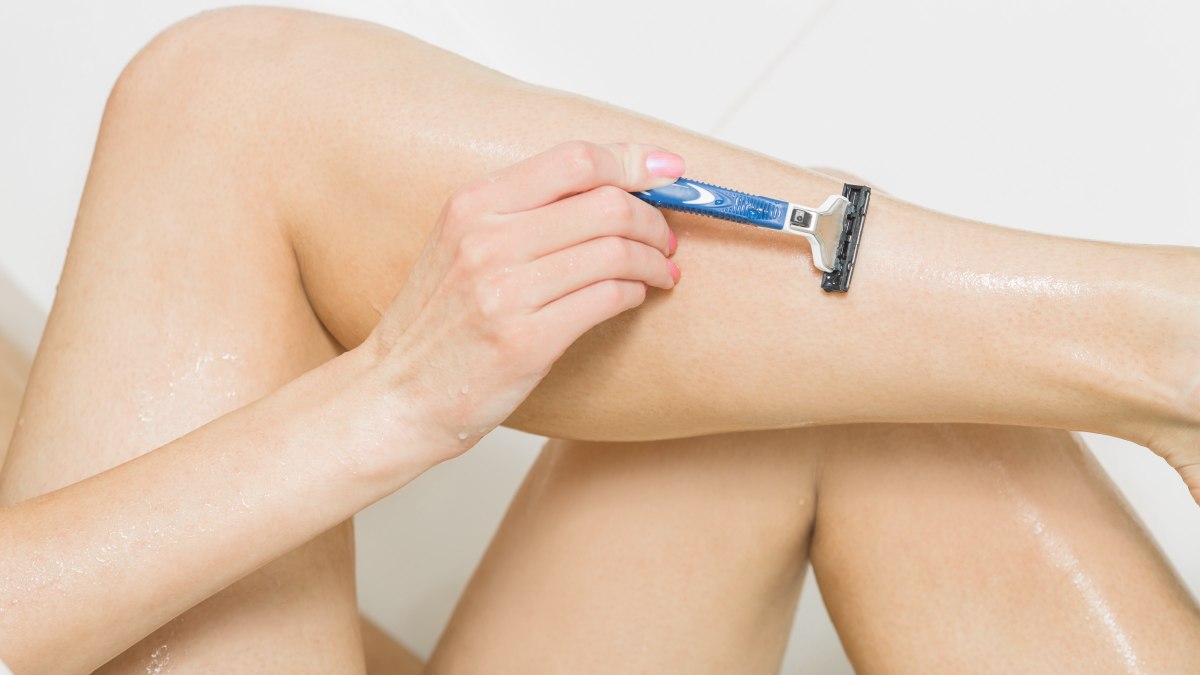
       Shaving: The act of shaving is the use of a sharp metal blade (or multi-bladed tool) to cut the hair off at the skin's surface. It is inexpensive, fast and usually painless. However, the effect only lasts a short time, and in most cases must be performed daily to maintain a smooth feel. It can also lead to ingrown hairs in some women.
       Contrary to popular belief, shaving does not cause hair to grow back thicker and darker. A clinical study was published in the Anatomical Journal in December 1928 by M. Trotter which proved that shaving hairs did not lead to the growth of thicker hair.
 
       Depilatories: These are usually creams, powders and lotions containing chemicals which dissolve the hair at the skin's surface. They, too, are inexpensive, fast and usually painless. But, like shaving the effects are short-lived, though they usually require repeating only every two to three days to maintain a smooth feel. There is also a risk (especially in sensitive people) to skin irritation and chemical burns.
 
       Friction: This is a less common method for hair removal because it has limited effectiveness. It is best used for fine hairs on the legs. A rough surface (usually rough strips attached on a mitt or glove) is used to buff away the hair at the skin's surface. It also has the advantage that is exfoliates the skin in the process. It is also inexpensive, with short-lived results and usually must be repeated every few days to maintain smoothness. Care must be taken to avoid rubbing the skin too hard so as to prevent abrasions and irritation.
 
       There are temporary methods with results that last longer than a few days.
       They are:
 
       Tweezing: Tweezing the hair involves the use of metal forceps to pull hairs from the skin by the root, singly or a few at a time. It is generally used for very small areas of hair removal, such as the eyebrows or stray hairs on the face. The process is too painful and much too slow for most women to consider using the method as a means of removing hair from larger areas like the legs or sensitive places like the bikini area. If done improperly, it can cause pitting and scarring of the skin's surface.
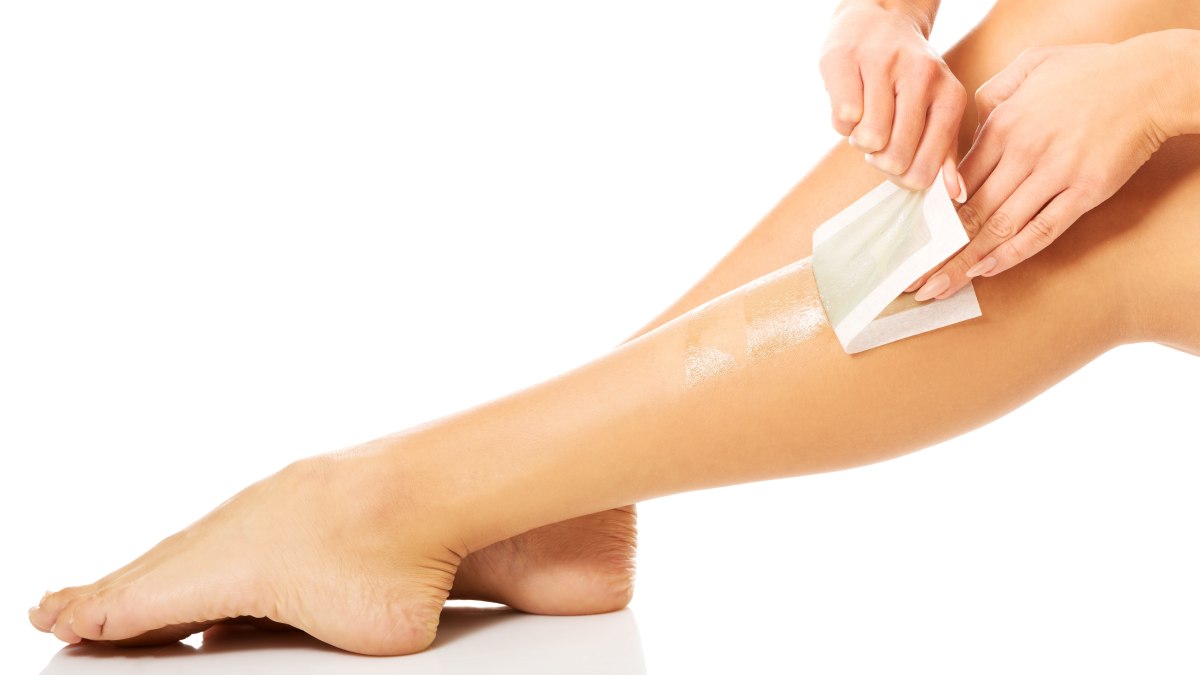
 
       Waxing: With the process of waxing, a heated wax product is applied to the skin and a strip of fabric or heavy paper is pressed to the wax. The strip is then quickly pulled away taking the hairs with it. Waxing is generally fast and inexpensive, but the hairs can break off at or below the surface of the skin, leading to ingrown hairs. The process can be messy and can be difficult to get the desired consistency. Many women find the process painful, and you must be careful to avoid infecting the skin.
 
       Sugaring: Sugaring is almost identical to waxing. It uses a very thick, sticky paste (which traditionally consists of sugary ingredients, hence the name) that is applied to the skin and covered with a strip of fabric or heavy paper. The strip is then pulled away quickly, taking the hair with it. It is inexpensive and fast, but can leave hairs broken, be messy and is just as painful as waxing.
 
       Threading: The technique of threading is called Khite in Arabic, and Fatlah in Egyptian and performed by a practitioner who holds one end of a cotton thread in her teeth and the other in her left hand. The middle portion of the thread is looped between the index and middle fingers of the right hand. The practitioner uses the loop to trap a series of unwanted hair and pull them from the skin. It is relatively inexpensive and the results can last up to four weeks, but it would be hard to find a practitioner outside of a large metropolitan city. It would be good for eyebrows and facial hair, but it can have side effects, including folliculitis, reddening of the skin, and changes in skin pigment.
 
       Rotary Epilators: The rotary epilator is a device similar to an electric razor, but instead of a cutting blade on a rotary head, it has rows of tweezers to pull hairs out by their roots. The devices work faster than tweezing and are especially good for legs and arms. The results can last from several days to several weeks. It can be difficult to use on the backs of the legs and the skin must be held taut or the device can pinch. Some women find it very uncomfortable to use, especially on sensitive areas.
 
Permanent:
 
       There are a number of imperfect options for 'permanent' hair removal, some of which are more effective than others. The ability to destroy hair follicles without damaging the surrounding skin tissue is problematic, as reflected by the effectiveness of the available options. Here are some of the more effective methods:
 
Next Page
 
 Link to us Privacy Statement
©NetservePlus