Choosing a Hairstyle for the Mature Woman (2)
Previous page
Color
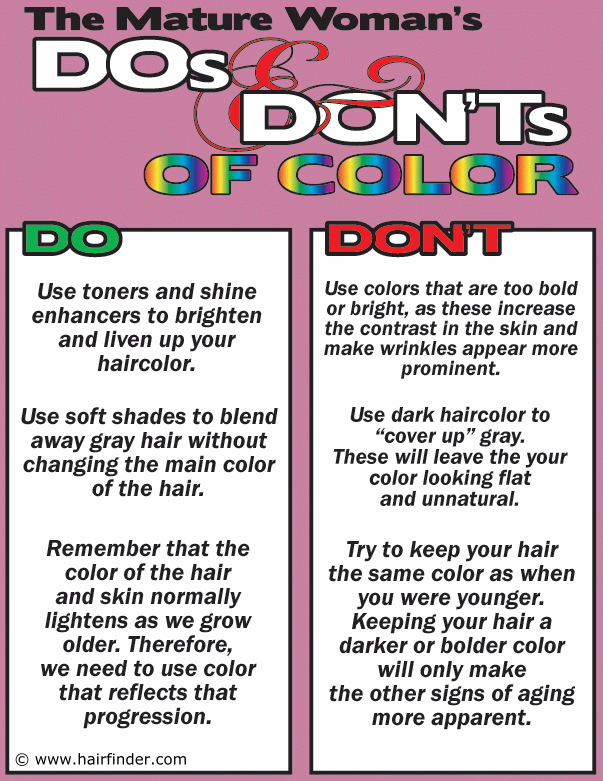
As a person ages, they undergo changes in the color of their hair. Some of the changes are dramatic, as in the case of gray hair, while some are subtle. The hair color generally lightens over the years and grows more subdued. Because of this, hair color can be a great way to revitalize your look and create a more youthful appearance.
When dealing with gray hair, remember that your goal is to keep your hair looking natural, while blending away the gray. Because of this, you want to avoid using hair color that will make the hair darker overall. This becomes especially true for those with lighter hair pigment in non-gray hair.
The general lightening of the hair color that happens as a part of the aging process is a slightly different situation with which to cope. Not only does the hair lighten overall as we get older, but the skin's pigmentation also changes, which can have a major impact on how we address the issue. In this situation, the goal is to add some vibrance and shine to the hair (since it also tends to become dull as part of this “fading”) without making the hair too dark to be compatible with the skin tone of the older woman.
Too many women, especially those who have colored their hair for a long time, make the mistake of keeping the same shade of color as they grow older. The end result is that many of these women end up looking washed out with hair of a color too dark for their skin tone.
When the hair has become faded and dull, the correct way to deal with it is to use a toner product (a translucent color formula) that will add just enough pigment to the hair to brighten or enrich the color without darkening it too much. In addition, you can use demi-permanent "clear-gloss" products that will add shine enhancers without using pigment and will restore a youthful luster to the hair.
Texture
Another change that the hair undergoes as we grow older occurs in the texture of the hair. Hair that is of normal or fine texture may become coarser (particularly in the case of graying hair), and even change its wave pattern, becoming straighter or wavier as the years go by. When the change is more significant, the goal is to ensure that the texture remains uniform.
In mild cases, additional moisturizing is called for, to keep the hair as hydrated and as soft as possible. In cases where the hair has become very wiry, or the hair has become wavier or straighter than it was originally, you can consider having a perm or straightening service to restore the youthful texture to the hair. Just remember that if your hair has become more porous as you get older, you will need to double your moisturizing efforts.
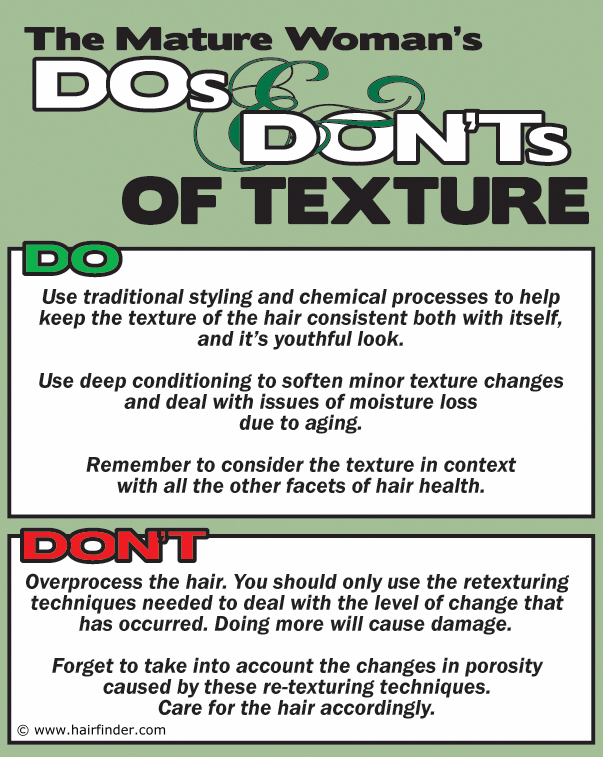
Of course, if you don't want to use permanent measures, you can sometimes get the desired results with specific styling methods employed to create waves or straighten the hair temporarily. The goal, of course, is to try to emulate the hair's natural look from when it was younger. You can use flat irons, curling irons, hot rollers, or simply a wet set to reshape the hair. Done properly, these methods can also increase the shine of the hair and further enhance a youthful look.
One thing to keep in mind that is of the utmost importance is that you should only use the retexturing techniques that are appropriate for the level of change in your hair. If your hair is only slightly coarser and drier, it is better to opt for moisture and deep-conditioning treatments to address the hair, rather than immediately resorting to a chemical solution. You risk overprocessing the hair and causing serious damage, which would defeat the purpose.
As difficult as it is to grow older, we can take some comfort in the fact that there are ways to help enhance your appearance without having to rely solely on expensive products and surgical procedures. And if you take a good look at some of the women in our society who have relied too heavily on these surgical anti-aging techniques, you'll see some definite merit in trying to take a more "graceful" approach to growing older.
©Hairfinder.com
See also:
Hairstyles to look younger
Over 40 hair and hairstyles
Long hair and the older woman
The changing hair of the aging woman
Does short hair really make you look younger?