Threading
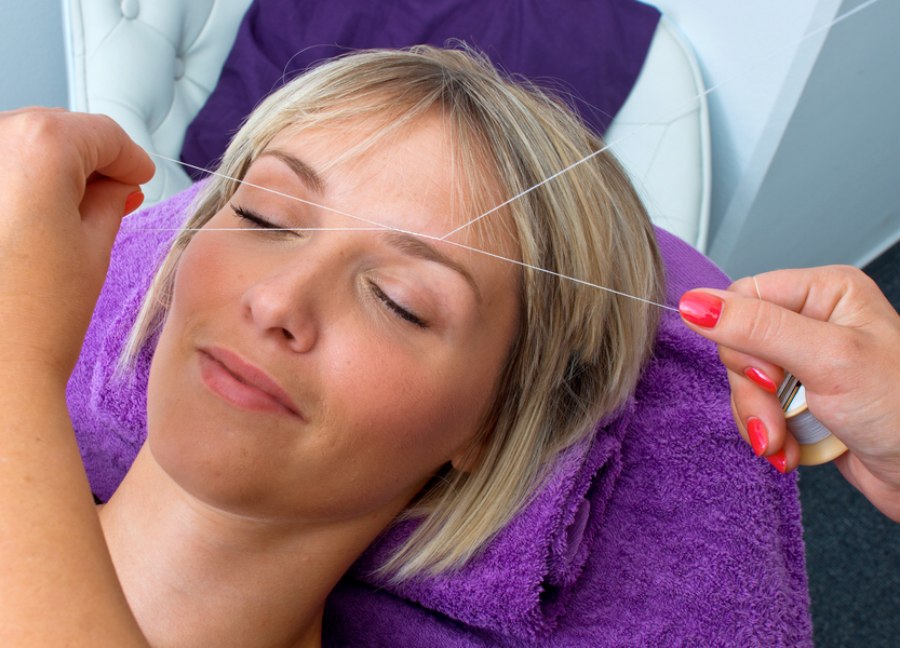
One of the less familiar ways to remove unwanted and excess hair from the body is through a technique called "threading."
Threading has been used since ancient times in the Far East and the Middle East but has only recently gained popularity as a hair removal method in the West. This rise in popularity is due to the increasing societal pressure to showcase beautiful and hairless bodies that conform to aesthetic standards.
Threading works by twisting a fine thread of cotton around an area of hair. One end of the cotton is held between the teeth, and the other end is held by the fingers of the left hand. The rest of the thread is held in the fingers of the right hand, and the loop in the middle becomes entwined among the hair. When the thread is twisted, it dislodges the strands of hair and pulls the individual hairs out from the roots.
The Advantages of Threading
Despite its relative anonymity, threading offers many benefits over other hair removal techniques. Because the cotton thread pulls out multiple strands of hair at once, threading is a much quicker hair removal method compared to plucking, tweezing, and sugaring treatments, which remove hairs one by one.
Threading is also an extremely hygienic method of hair removal as it only requires a piece of cotton thread, which can be disposed of after use. Since it does not require sophisticated equipment, threading can be easily performed at home without the need for a beauty salon.
Although when it is performed by a professional, the procedure can take just minutes. Threading the eyebrows, for example, will take approximately 15 minutes compared to the arduously slow process of plucking, which can often take between 30 to 45 minutes to achieve a structured shape.
Threading is an incredibly precise method of removing unwanted hair, which can result in a very neat and polished appearance. Because it involves extracting hair from its natural lines, it provides a more chiseled and defined look compared to other more random and sporadic hair removal methods such as waxing.
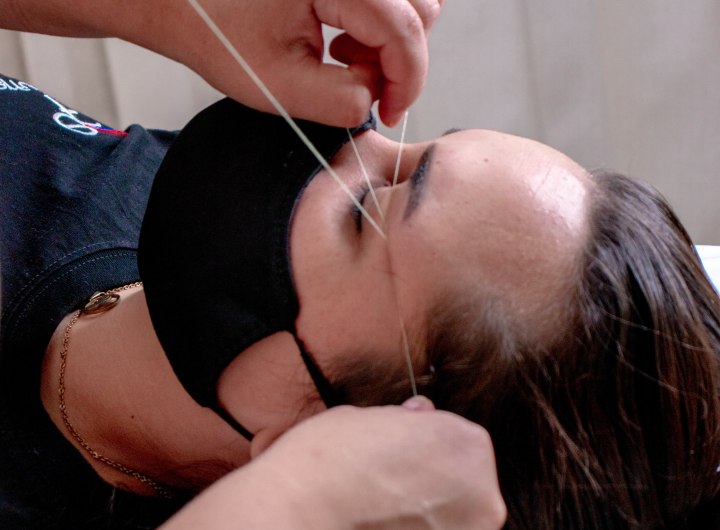
Perhaps the most significant advantage of threading as a means of removing unwanted body hair is its exceptional safety. Apart from a slight reddening of the skin immediately after the treatment, which usually disappears within an hour or less, very few unwelcome side effects have been reported.
Because it rarely causes harm to the skin, threading is a suitable method for people with sensitive skin. Additionally, since it does not rely on harsh chemicals or aggressive procedures, it is appropriate to use on the more sensitive areas of the face.
Another significant advantage of this hair removal method is that, unlike some permanent techniques like laser treatments and flashlamps, threading can remove hair of all colors and textures. It can effectively remove hair of any length, ranging from long, coarse pubic hair to shorter, stubbly hair. This gives threading a unique advantage over techniques like waxing, which require the hair to be a certain length.
Furthermore, unlike waxing, threading can be safely used by individuals who are using vitamin A products, such as Retin-A and Isotretinoin.
Continue reading ...