You are here:  Home  ›  How to  ›  Men's Hair  › 
pixel
hairstyle Hairfindertrademark graphic
Hairstyles, Hair Care & More!
 
Home  |  Search  |  Contact  |  News  |  Updates  |  Hair on eBay  |  Hairbooks  | 
pixel
pixel
pixel
pixel
pixel
Virtual Hairstyles  |  Hairstyles (members)  |  Hairstyles  |  Hair Q&A  |  Hair Care Products  | 


Celebrity Hairstyles graphic


hair and fashion


pixel
pixel
pixel
Het kaal geschoren hoofd Se raser la tête Afeitarse la cabeza AddThis Social Bookmark Button - Bookmark this Page!
pixel

The Shaved Head

       One of the new "classic" looks in men's hair styling is "no hair", or more specifically, the shaved head look. The shaved head look gained popularity with the punk subculture movement in the UK in the mid-to-late 70s, and was later adopted by a variety of other movements. What was originally a sign of 'working class pride" in the 60s, soon became associated with other, less savory groups. The shaved head look or straight razor shave (and those wearing it) was viewed with suspicion.
       Today, the shaved head no longer bears as much social stigma, and is fast becoming an archetypal look in men's style (much like the men's ponytail in the 80s). Some men opt for the shaved look out of a desire to cultivate a certain image. For others, it is a matter of convenience. And finally, there are those who decide to shave their heads because of extensive (or increasing) hair loss, as a way to embrace what they feel is the inevitable (either due to male pattern balding or illness).
       Regardless of the reasons for choosing to shave one's head, there are some things to keep in mind when considering this look:
 
Head Shape Is Important:
       If your goal in shaving the head is aesthetic, you'll want to consider the shape of your head before you make such a drastic commitment as shaving the head. Being completely honest, some shaved heads look better than others. For the best result, your head should be symmetrical, with a smooth roundness in the back from the top of the head to the occipital bone. An angular skull with protrusions or "lumps" (generally found in the parietal ridge and crown areas) will not look as good when shaved. You should also be aware that if you have certain traits (protruding ears, scars on the scalp, etc.) they will become more pronounced by shaving the head. However, the ultimate decision is yours, and if you feel strongly about shaving your head, by all means, do so.
 
How to Shave Your Head - Stage One:
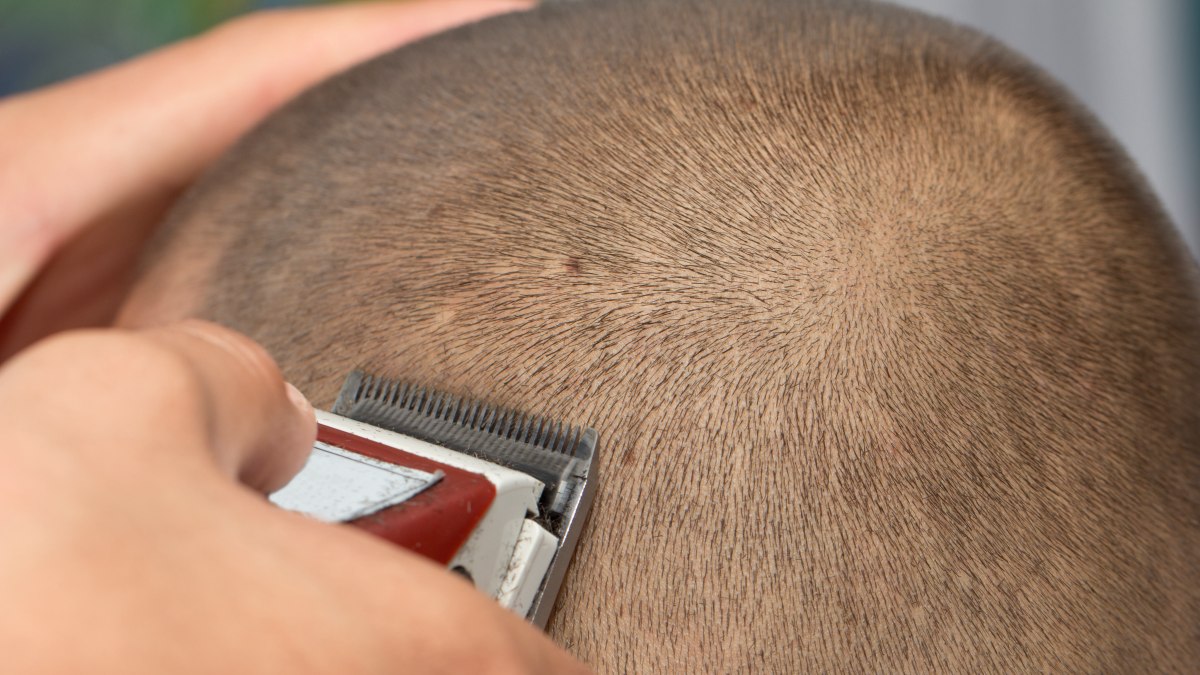
       Okay, so you've made the decision to shave your head, and the time has come to put your plan to practice. The first step is going to be getting your hair to a length where shaving can be easily accomplished. This means a clipper cut. While you could shave your head without shortening the hair first, the process will become extremely messy and will take much, much longer to complete. If you don't have clippers, you can use a beard trimmer.
       Use the clippers to cut the hair by gliding them along the scalp in the opposite direction of the hair's growth. Depending on the length of your hair, you may need to cut paths that are about half the width of the clipper blades to prevent overburdening the clippers. If the hair is long enough to do so, grasping the hair being cut and holding taut away from the scalp will make the process go faster. This will also allow you to place the cut hair into a waste receptacle and minimize the clean-up needed later.
       The goal is to reduce the length of the hair to about 1/8th of an inch or less. When finished, you should check to make sure you've covered the whole head, and should be sure to catch any stray strands that may have escaped being cut.
 
Stage Two:
       The second stage of the process is very similar to that followed in shaving the face. You first want to soften the hair before shaving to make things easier. This can be done most easily by wetting a towel in water that is as hot as you can tolerate, then wringing out the excess water and wrapping the towel around your head. Allow it to sit for a few minutes to allow the heat and moisture to penetrate the hair.
       Once the hair has been softened, apply a liberal amount of shaving cream or gel and give it another moment to penetrate the softened hair and scalp. The shaving cream helps to lubricate the skin and will help to prevent razor burn and nicks. Finally, it's time to start shaving.
 
       Using the razor of your choice, place the blade end against the scalp and drag it in the direction of the hair's growth. Be sure to use very gentle pressure when shaving the scalp, especially when you have scars or uneven surfaces on the head. Unlike the skin of your face, your scalp has been protected from the elements by the hair and is unused to being shaved. Therefore, it will be much more sensitive and may be more prone to nicks and cuts while shaving.
       {Note: You should be aware that the scalp has a great many blood vessels which provide nutrients and oxygen to the hair follicles. If you nick yourself, you will likely find that the scalp will bleed much more profusely than other areas of the body, and it will likely be slower to clot. Use cotton or tissue soaked with alcohol to disinfect the cut and help to stanch the bleeding.}
       Take your time while shaving. You can always make a second (or third) pass with your razor, and spending the extra time being careful is preferable to spending it treating unintentional cuts. Besides, having a head covered with nicks and cuts is less than attractive and ruins the look you're trying to achieve. Also, rinse your razor thoroughly with warm or hot water between passes on the scalp to remove shaving cream and hairs that become lodged in the blades. If you experience discomfort during the shaving process, you can use cold water to rinse the blade and will find that this helps make shaving more comfortable.
       Once you've completed the shaving process, use your towel (wet this time with cool water) to wipe off excess shaving cream and remove the cut hairs that may be left behind. Then apply lotion (with SPF protection of at least 15) to the newly shaved scalp to moisturize, soothe and protect the newly exposed skin.
       After leaving the lotion on for a few moments to be absorbed, you can use a hand towel (with a bit of vitamin E oil) to gently buff the scalp, if you want a "shiny" look.
 
>> Next Page
Google
 
 Link to us Privacy Statement
©NetservePlus