How to Cut a Dramatic A-Line
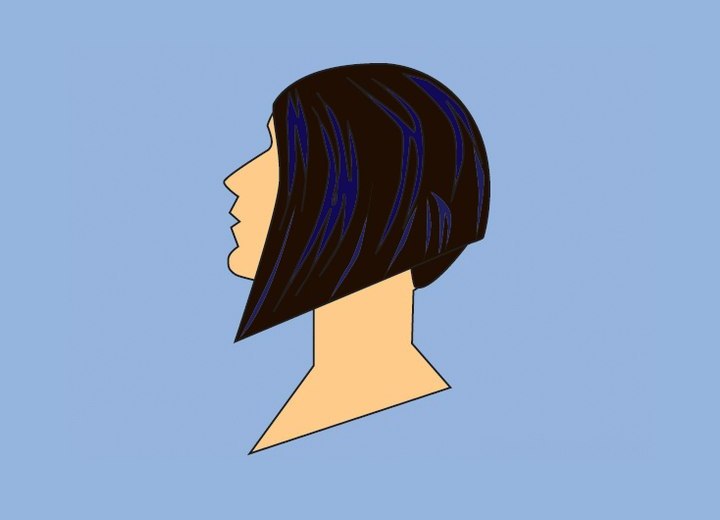
The initial step is to define the terminology being used. An "A-Line" haircut refers to a traditional, straightforward bob hairstyle that has slightly more length at the front of the head than at the back, resulting in a subtly angled cut. The term "dramatic" often causes issues for hairstylists and their customers because what one person considers "dramatic," another may perceive as "excessive." This type of hairstyle is also commonly known as the "Concave Bob."
In this case, "dramatic" most likely refers to the angle of the "A-Line" cut, and specifically how much shorter the hair is cut in the back compared to the length in the front. For a more dramatic appearance of the "A-Line" cut, we want to cut the hair at the back of the head to at least the mid-nape area.
Release half of each of the two nape sections (right nape and left nape), and then secure the upper halves once again. The hair in the lower halves of these nape sections, as well as the perimeter hair below them, will be cut very short. You can use clippers to cut them to any length from skin depth up to half an inch, or you can taper them depending on the desired look.
You are basically cutting a section that is roughly crescent-shaped short at the back of the neck.
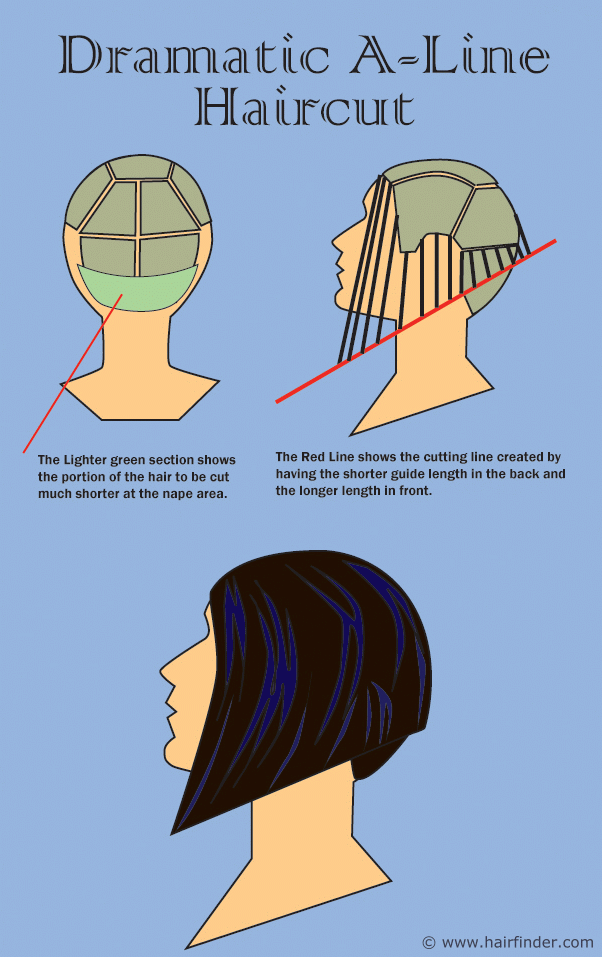
Once you have cut the lower nape sections to the desired length, you can release the second half of the nape sections (right and left) as well as the lower halves of the right and left side sections.
Comb the sections straight down until they hang smoothly. At the front of the head, cut a guide to the desired length for the front of your "A-Line" cut. This should be accomplished by either taking the very center front one-inch segment (if the style has no bangs/fringe) or thin segments from the front on each side of the bangs/fringe area (if the style has bangs/fringe).
Bringing the side segments together in front and cutting them together ensures that the guides on each side are of equal length. The length in front should be well below chin length.
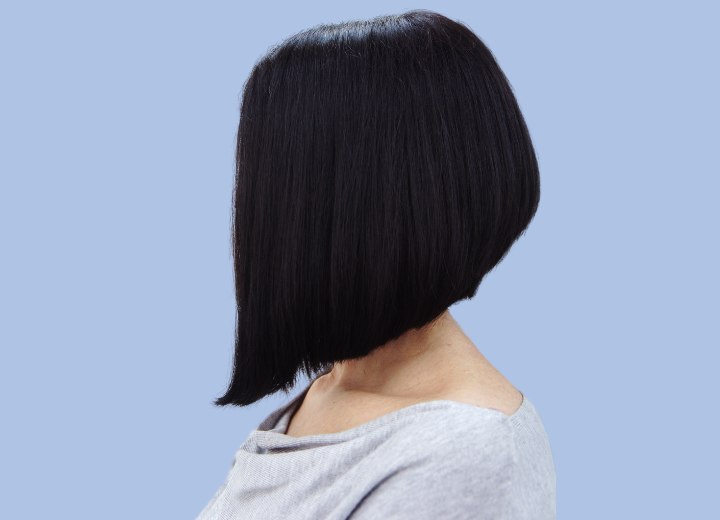
Cut the steeply angled cutting line and gradually lower the remaining hair by approximately half an inch at a time, combing the hair down smoothly as you progress. Cut these segments to the guide lengths that were established earlier. If necessary or preferred, you can use a razor tool to lightly texture the ends of the cut and achieve a smooth, fine-pointed finish.
This cut looks best when executed on straight hair with at least medium density and thickness. It can be styled using a blow-dryer and round brush or flat ironed to achieve super smoothness. Smoothing balms and anti-frizz serums are necessary for this hairstyle, as well as protein-rich shampoos and conditioners to help maintain the hair's smooth and sleek appearance.
©Hairfinder.com
See also:
Photos of inverted bobs
How to cut a stacked bob
How to cut a short angled bob