A Guide To Permanent Waves (2)
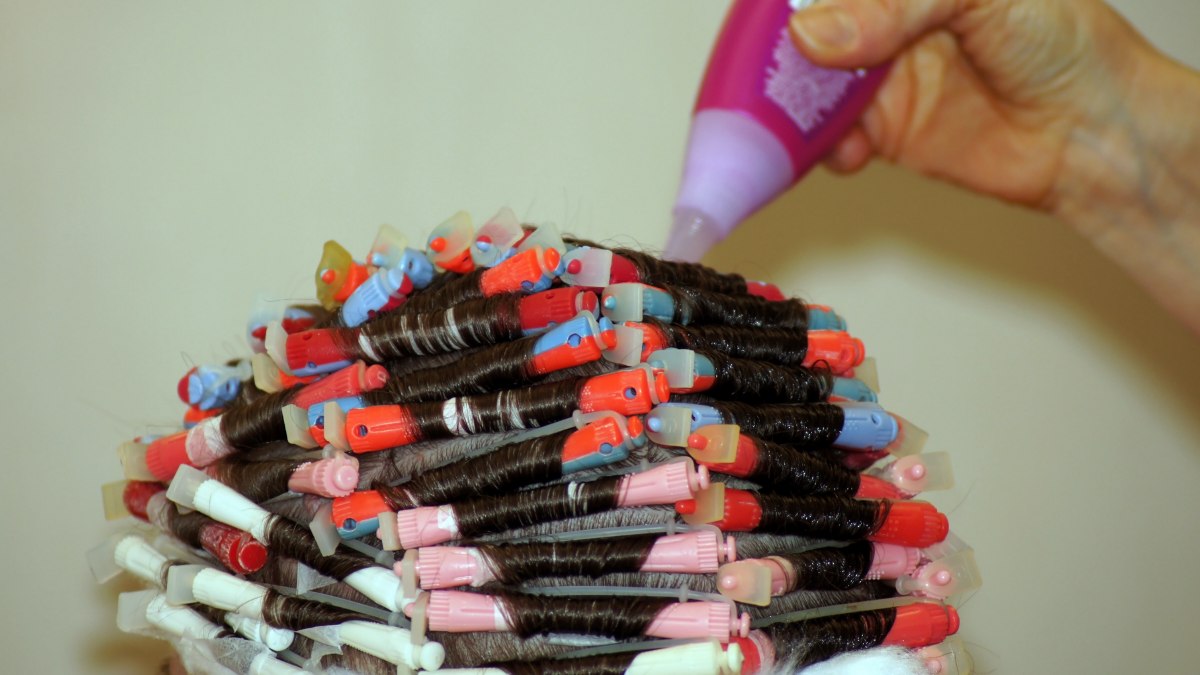
Ammonia-Free Waves
Ammonia-free waves use an ingredient that does not evaporate as readily as ammonia, so there is very little odor associated with their use.
One common substitute for ammonia is an alkanolamine, such as aminomethylpropanol and monoethanolamine. These ammonia-free waves generally process the same as standard alkaline waves, but since the substitutes for the ammonia don't evaporate as readily as ammonia, there is typically very little odor associated with their use.
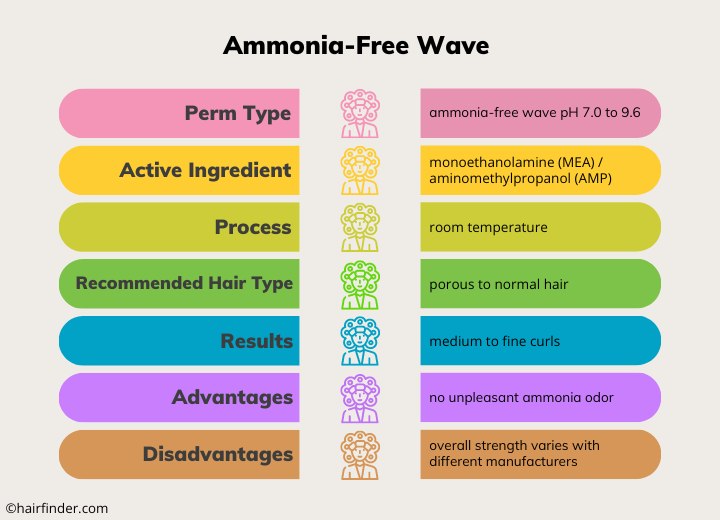
Ammonia-free waves are generally suited to use on hair that is porous to normal in resistance level, processes at room temperature, and typically generates medium to fine curls. While these waves may not smell as strongly as ammonia, they can still be just as alkaline and just as damaging. Remember that "ammonia-free" doesn't mean "damage-free".
Thio-Free Waves
Thio-free waves use a substitute for Ammonium Thioglycolate (ATG) as the primary reducing agent in the waving formula. Commonly, the substitutes used are cysteamine or mercaptamine which, while not technically being ATG, are still thio compounds. Thio-free waves are marketed as being damage-free, but this isn't necessarily true. In high concentrations, these can be as damaging as thio to the hair.
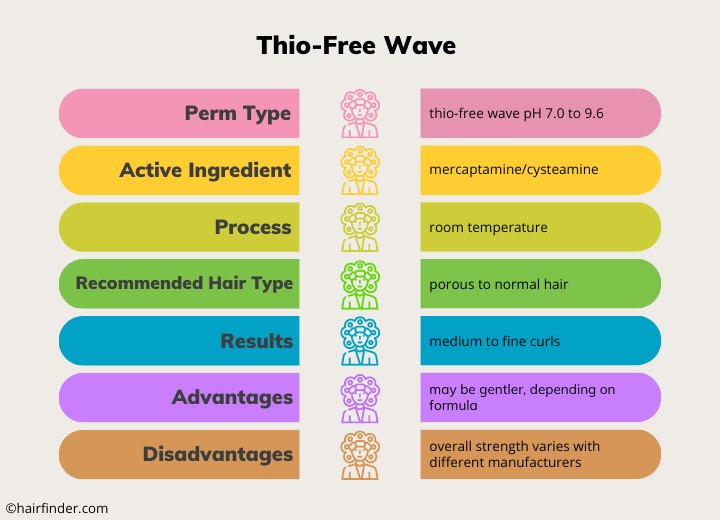
Thio-free waves have the benefits of processing at room temperature, and produce medium to fine curls. The thio-free wave is suited for use on normal to porous hair types, and can be gentler on the hair depending on the individual formula used. Since the strength varies from manufacturer to manufacturer, be sure to use caution when selecting and using a new formula.
Low-pH Waves
Low-pH waves use an alternative formula for their waving solutions. Instead of Ammonium Thioglycolate, low-pH waves use sulfates, sulfites, and bisulfites as their primary ingredients. These formulations are very gentle since they work at a low pH, but while they have been in use for years, they are not very popular. The issue is that the permanent waves based on sulfites are very weak and do not provide firm curls. Therefore, they are often marketed for use in body wave services.
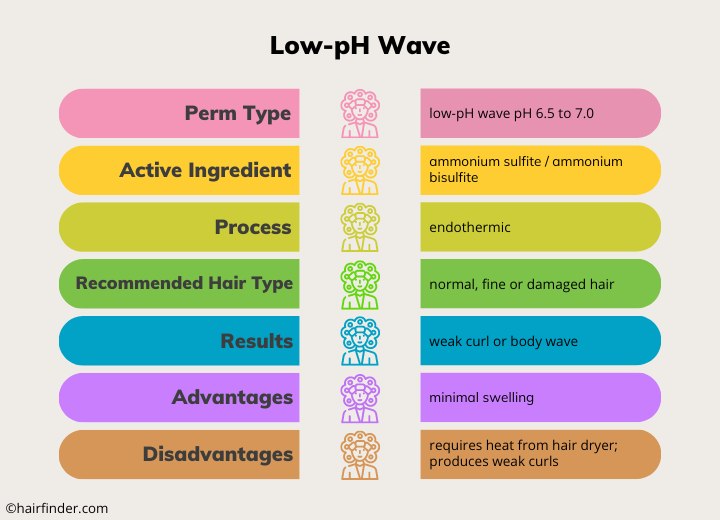
The weak formulation of low-pH waves makes them suited for use with fine and damaged hair or in cases where a gentle wave is desired as opposed to a firm curl. Low-pH waves are endothermic waves and will require the heat of a hair dryer.
So, as you can see, there are many options available when you start looking for a permanent wave formula. Knowing what the different terms mean and how they differ can help you select the right option for your hair and help you know whether this perm is something you can manage on your own. Just remember that if you are unsure, always ask a professional for guidance, or at the very least try to err on the side of caution.
©Hairfinder.com
See also:
The different hair types
Non-smelling perm