The Mullet Haircut
Okay, I know that I am possibly going to be blacklisted by the “Style Conscious Hair Designers Guild for Progressive Styles” for saying this, but the “mullet” hairstyle isn’t a bad hairstyle.
It has been vilified because it is associated with deeply Southern, non-urban, men. It has been worn by Country Music artists (Alan Jackson, Randy Travis, Billy Ray Cyrus, to name a few) and is often portrayed as the hairstyle-of-choice among poorly educated, hard-drinking, "Rednecks".
At the risk of offending the sensibilities of those individuals who prefer a more urban and chic hairstyle, we’re going to show you the proper way to cut a mullet. Actually, we'll be showing you how to cut the two most popular versions of the mullet: the Classic Mullet and the Ponytail Mullet. But first, let's talk about the mullet in general, these two variants on the mullet theme, and the benefits of each.
The Mullet as a Style:
The mullet has existed for much longer than many people think. All that is required for a hairstyle to qualify as a mullet is that it has shorter hair in the front and on top and longer hair in the back, particularly at the nape area. For those of you who remember the 1970s TV show "The Brady Bunch" and Mrs. Brady’s hairstyle with the flip at the neck, THAT was a mullet.
The early 1980s saw a lot of mullets on female rockers and more and more men as the years progressed. Even African Americans had their own versions of the mullet. Michael Jackson had a mullet on the cover of "Thriller". The mullets were straight and spiky, curly and cascading, wild and wavy, but they were all shorter on the top and sides and longer in the back, and were therefore, clearly mullets.
The mullet hairstyle is great for people with rounder faces, or who want to emphasize their eyes or cheekbones as a focal feature. It's also a great style for making the neck look longer.
The Classic Mullet:
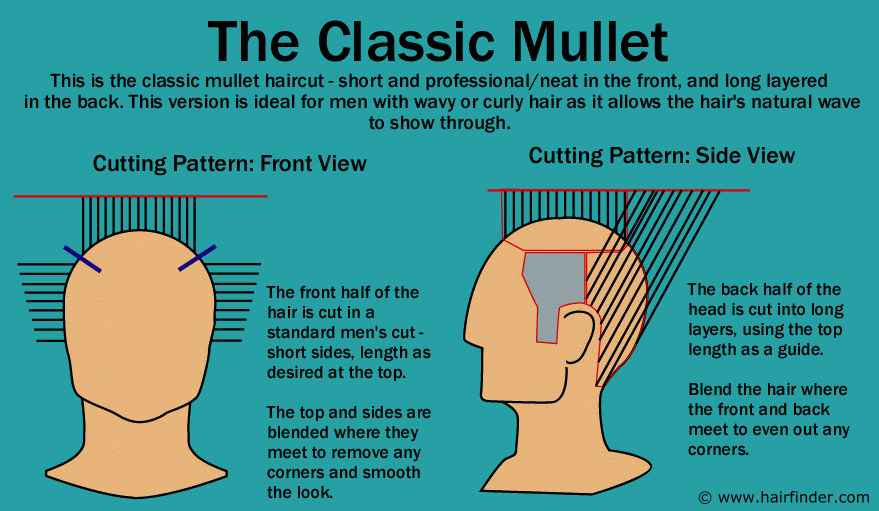
The classic mullet style (for men) looks just like a man's traditional haircut on the top and sides of the head. The hair is trimmed short around the ears and on top, then gradually gets longer and layered in the back.
It's worn by men who want to have a neat and tidy look in the front and still wear their hair long in the back. Men with almost any hair type can wear this variant, but it looks especially good on men with natural waves or some curl to their hair. The layers at the back of the head maximize the amount of curl in the hair.
The Ponytail Mullet:
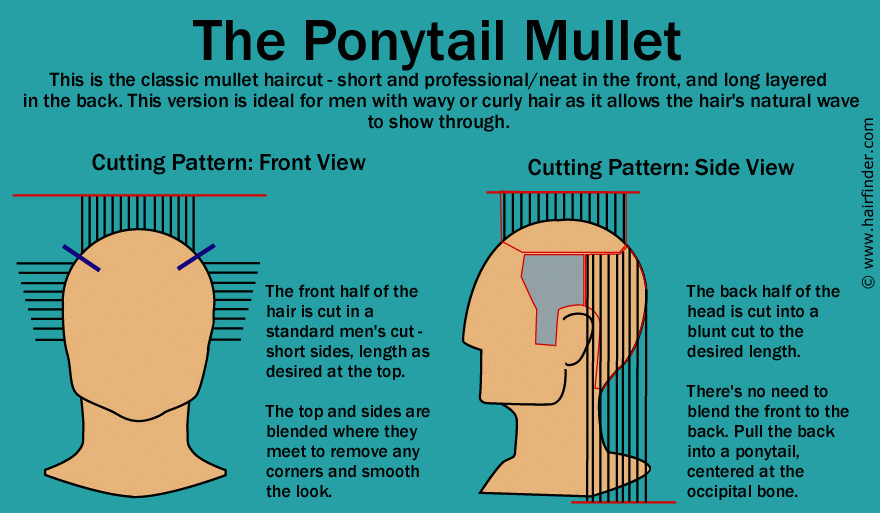
This is the mullet style worn by many men who want long hair but need to keep a tidy and "professional" look for their jobs. It's especially good for those who pull the hair back into a ponytail. This style works best with straighter hair, because very wavy or curly hair can become "bushy" at the ends because of the blunt cut.
Because this style is mostly worn by men who intend to wear a ponytail, some opt for a half-inch perimeter of hair to be cut short so that when the hair is tied back into a ponytail, it looks more like a traditional haircut until viewed from the back.
Continue reading ...