Choosing Short Hair
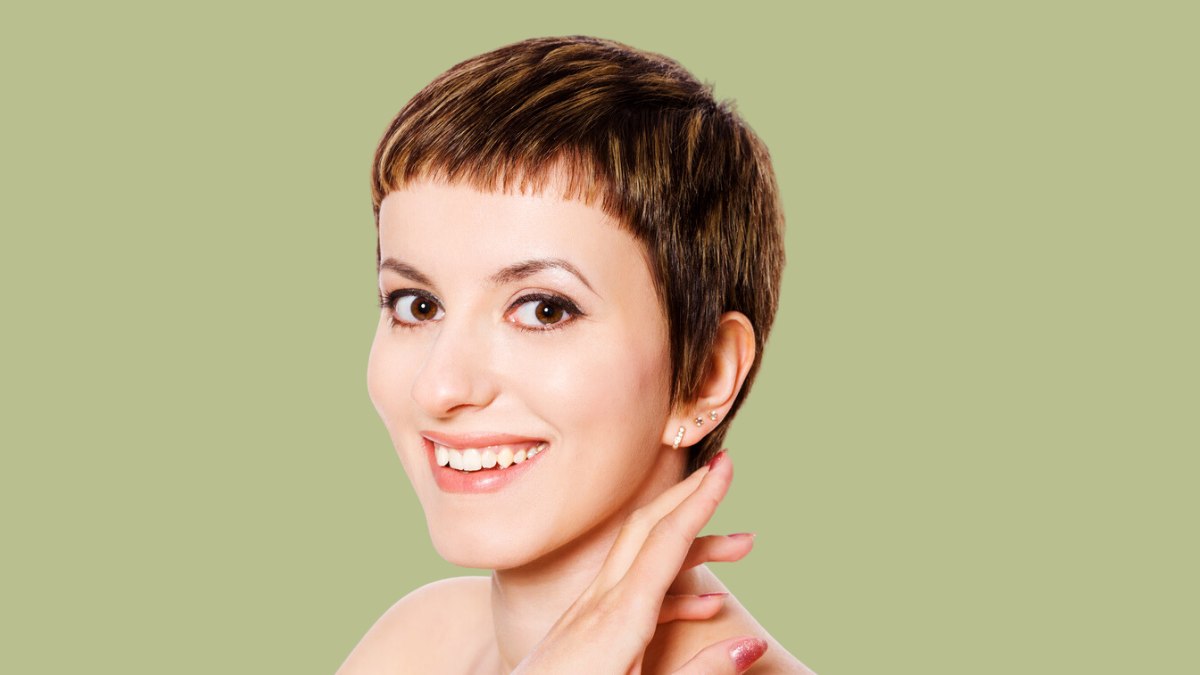
Short hairstyles are perhaps the most poorly managed hairstyles worn by women. Far too often, the decision to go short is made based on convenience and ease of care. As a result, the short style ends up being unappealing to the individual. The thing many women forget is that just because every woman CAN have short hair, not every woman SHOULD. All of the standard rules apply when it comes to choosing short hair.
Luckily, "short" is a relative term and can mean a fairly wide range of lengths. In addition, short haircuts can incorporate a wide range of wave patterns, too, which further assists in helping those who want short hair to look good while wearing it. The style has to flatter the face and needs to represent some degree of balance.
Anatomy of a Short Hairstyle
Length
Since the term "short" refers to the length of something, it is obvious that the key element of a short hairstyle is the length chosen. While the length can vary, it is generally considered that a short haircut is seldom longer than the midpoint of the neck. Of course, most short styles are shorter than this, and you can see virtually every increment possible in the short hairstyles available.
While there really is no "rule" against anyone wearing super-short styles, it should be noted that these shorter looks are often best-suited to those with fine-boned and delicate features. Those who have weight issues or round faces will often think that a super-short style is good for them, and end up accentuating the troublesome features rather than minimizing them.
Layers
A short hairstyle can feature a variety of layering techniques. The hair can be blunt-cut to a clean edge on the bottom line of the style, could have even long layers, or combine the two with a blunt edge and interior layering.
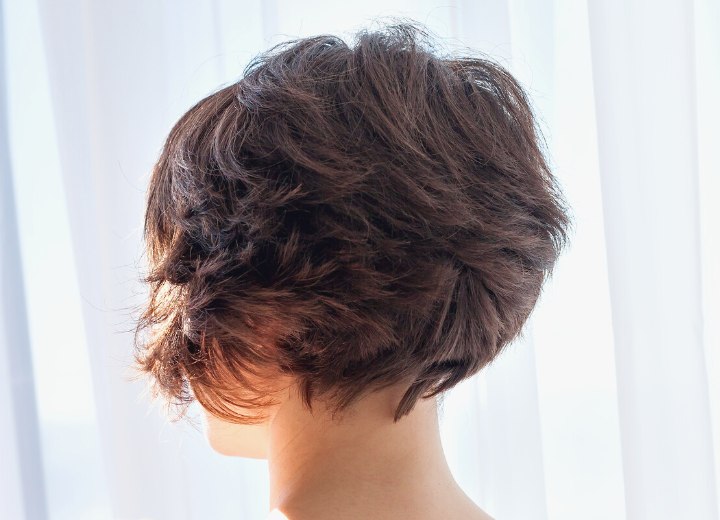
Colors aren't specifically restricted by the inclusion in a short hairstyle. Rather, we mention color here because color can often be used in a short haircut to add drama and excitement and give an otherwise "normal" look an edge.
Texture and Texturing
In this case, we’ll discuss both the thickness of the hair and the finishing techniques used in a short hairstyle. The two are somewhat connected since the diameter of the hair and its "feel" indicate the need for certain finishing techniques to make the hair look the way you want.
Finishing hair cutting techniques can also take a bland-looking hairstyle and make it exciting and increasingly flattering to an individual.
Avoiding the Boring Short Hair Pitfall
Often, a woman chooses a short hairstyle solely for the convenience and increased ease of care it offers. In cases like this, when simplicity is the motivating factor, short hairstyles can become boring. Perhaps the person doesn't think of the possible ways to adapt the look, or has had short hair for so long that wearing it is a habit and the look suffers from neglect.
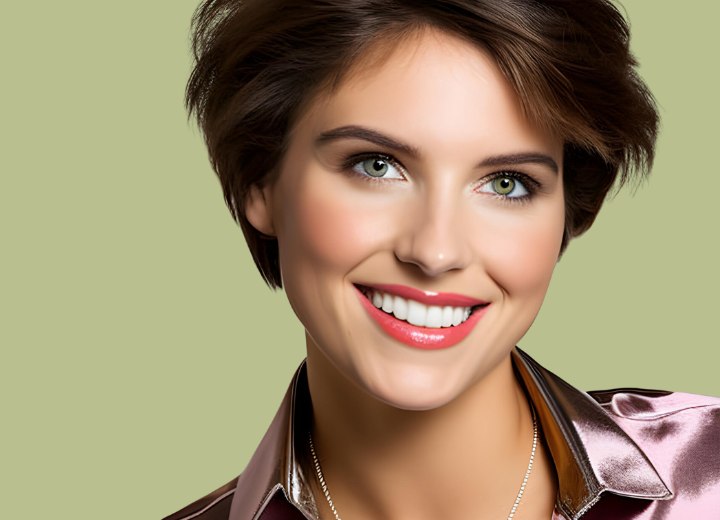
Perhaps your look could benefit from a splash of color. Or frankly, the answer could be a simple matter of adding a new styling product to take advantage of the traits your hairstyle already possesses.
Examples
It’s always easier to explain what is meant in a given situation when you have a visual representation that illustrates a specific point. And since everyone likes celebrities, let’s look at a collection of celebrities who sport short hairstyles and discuss what makes these styles work, and for whom.
Continue reading ...